
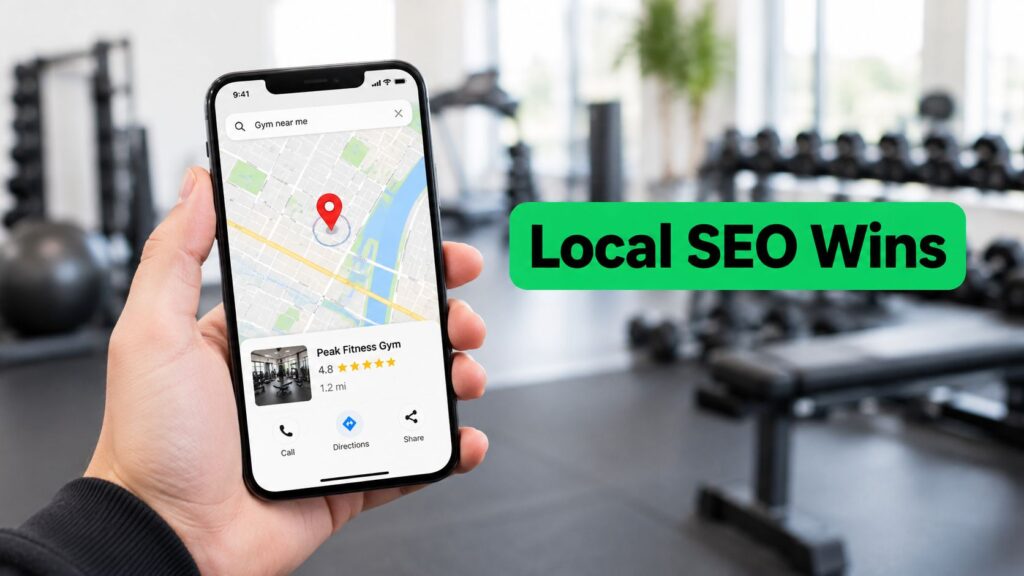
A lot of gym owners are in the same spot right now. The website looks decent, the facility is strong, members are happy enough, but nearby searchers still find competing gyms first. How we improved local SEO for a gym came down to three practical moves in the right order: tighten the Google Business Profile, fix citation and NAP consistency, and build suburb-focused landing pages that reflect real service coverage. Over 6 months, Search Console impressions rose from 4,500 to 9,800, clicks increased from 180 to 390, and key local terms moved from around position 18 to 5.
Table of Contents
- Overview of Our Local SEO Improvement
- Baseline Gym Performance and Market Context
- Audit Findings and Local SEO Challenges
- Priority Actions and Implementation Sequence
- Google Business Profile and Citation Corrections
- Developing Suburb Focused Landing Pages
- Technical Local SEO and Structured Data
- Results and Impact Analysis
- Practical Checklists for Gym Local SEO
- Cross References and Further Reading
Overview of Our Local SEO Improvement
This gym didn't need more vague “brand awareness”. It needed better visibility when people were actively comparing nearby options, checking maps, and deciding where to train. The improvement focused on the local foundations that usually move the needle for gyms: a complete and aligned Google Business Profile, consistent business details across the web, and suburb-targeted pages built around genuine membership and training intent.
The sequence mattered. Google Business Profile work gave Google cleaner relevance signals. Citation correction reduced trust issues caused by conflicting business details. Suburb pages then gave the site a way to compete for higher-intent searches beyond a generic homepage.
What worked wasn't flashy. It was disciplined local SEO with measurement attached.
Practical rule: For a gym, local SEO usually fails when the profile, citations, and website describe the business differently.
Readers looking for a realistic process will find the same structure used in the project itself:
- The baseline shows where performance started and why the market made local SEO necessary.
- The audit breaks down what was holding visibility back.
- The implementation covers the exact first steps and why they were prioritised in that order.
- The results connect visibility gains to actual enquiries, not just rankings.
Baseline Gym Performance and Market Context
Before any changes, the gym's local search presence was weak where it mattered most. Search Console showed 4,500 impressions and 180 clicks over the comparison period, while important local terms sat around position 18. That usually means the business is visible enough to appear occasionally, but not visible enough to earn consistent clicks from people ready to visit or enquire.
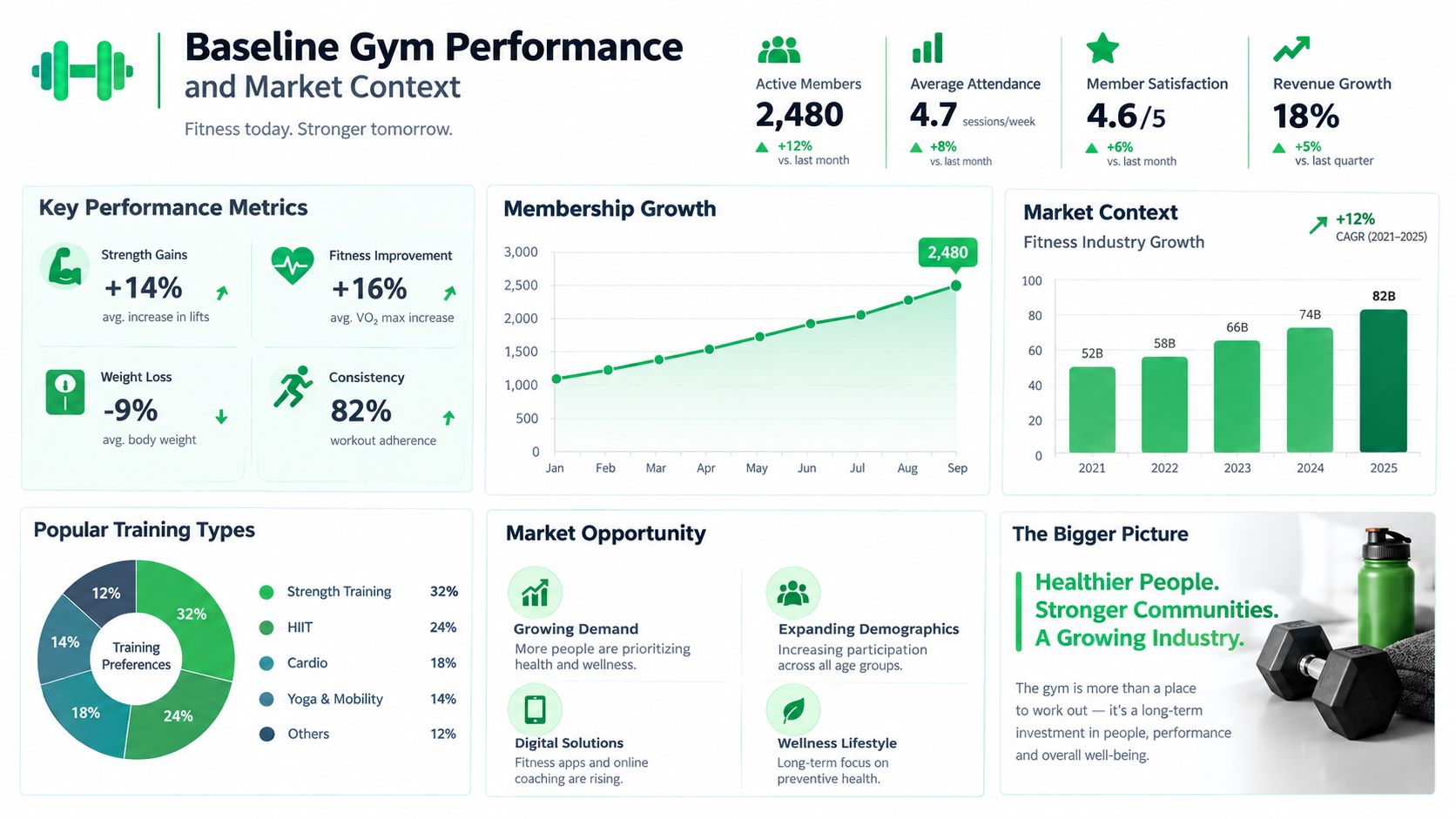
The Melbourne context made that baseline more serious, not less. Statista's Australian gym and fitness centre data recorded 7,313 health and fitness centres in 2024, an increase of over 1,400 centres since 2020, and a separate business-count estimate put the market at 7,595 businesses in early 2024, up 3.9% from 2023. In a market with that much density, a homepage targeting “gym Melbourne” is rarely enough.
What the baseline actually meant
The issue wasn't zero visibility. The issue was misaligned visibility.
| Metric | Starting point | What it suggested |
|---|---|---|
| Search Console impressions | 4,500 | The gym was entering search results, but not strongly enough |
| Search Console clicks | 180 | Searchers weren't choosing the listing often |
| Key local rankings | Around position 18 | The gym was too far down to win steady local demand |
A gym can have a solid facility and still lose in search if Google can't clearly connect the business to the suburbs and services in demand.
The real problem was discoverability during high-intent searches, not a lack of website pages.
Why local SEO became a growth requirement
For fitness businesses, local SEO isn't cosmetic. Searchers compare by suburb, training style, access, convenience, and trust signals. They also move fast. If profile details are incomplete or the website doesn't support local intent, those searchers don't wait around. They pick another gym.
Audit Findings and Local SEO Challenges
The audit showed a familiar pattern. None of the individual issues looked catastrophic on their own, but together they weakened the gym's local eligibility. Google's own guidance explains that local visibility is influenced by relevance, distance and prominence, so the work started by treating the Google Business Profile and the website as one connected entity rather than separate channels, based on Google Business Profile local ranking guidance.
The main weaknesses
The first problem sat in the profile itself. Core details existed, but they weren't as complete or as commercially useful as they should've been. Category choices, service descriptions, booking pathways, and facility information all needed tightening so the profile better matched the gym's offerings.
The second issue was inconsistency. Older directory listings carried outdated or mismatched versions of the business name, address, or phone details. That doesn't always create an immediate ranking collapse, but it can dilute trust signals and muddy Google's understanding of the business. A separate explainer on NAP consistency for local SEO is useful for anyone seeing the same problem.
What the website was missing
The website had another common flaw. It mostly relied on broad pages instead of pages aligned to suburb-level intent. That meant the site had limited relevance for searches tied to nearby areas, service combinations, and local convenience factors such as parking or public transport access.
Technical support for local SEO was also thin:
- Missing structured data meant less machine-readable context about the business location.
- Weak internal linking made key commercial pages harder to reinforce.
- Location signals were underdeveloped because the site didn't clearly connect services with the actual service area.
- Potential crawl inefficiencies reduced confidence that local pages were being interpreted cleanly.
A final challenge came from restraint. It would've been easy to create thin suburb pages stuffed with repeated place names, but that tends to produce weak content and poor long-term outcomes. The better approach was to build fewer pages with stronger local detail.
Priority Actions and Implementation Sequence
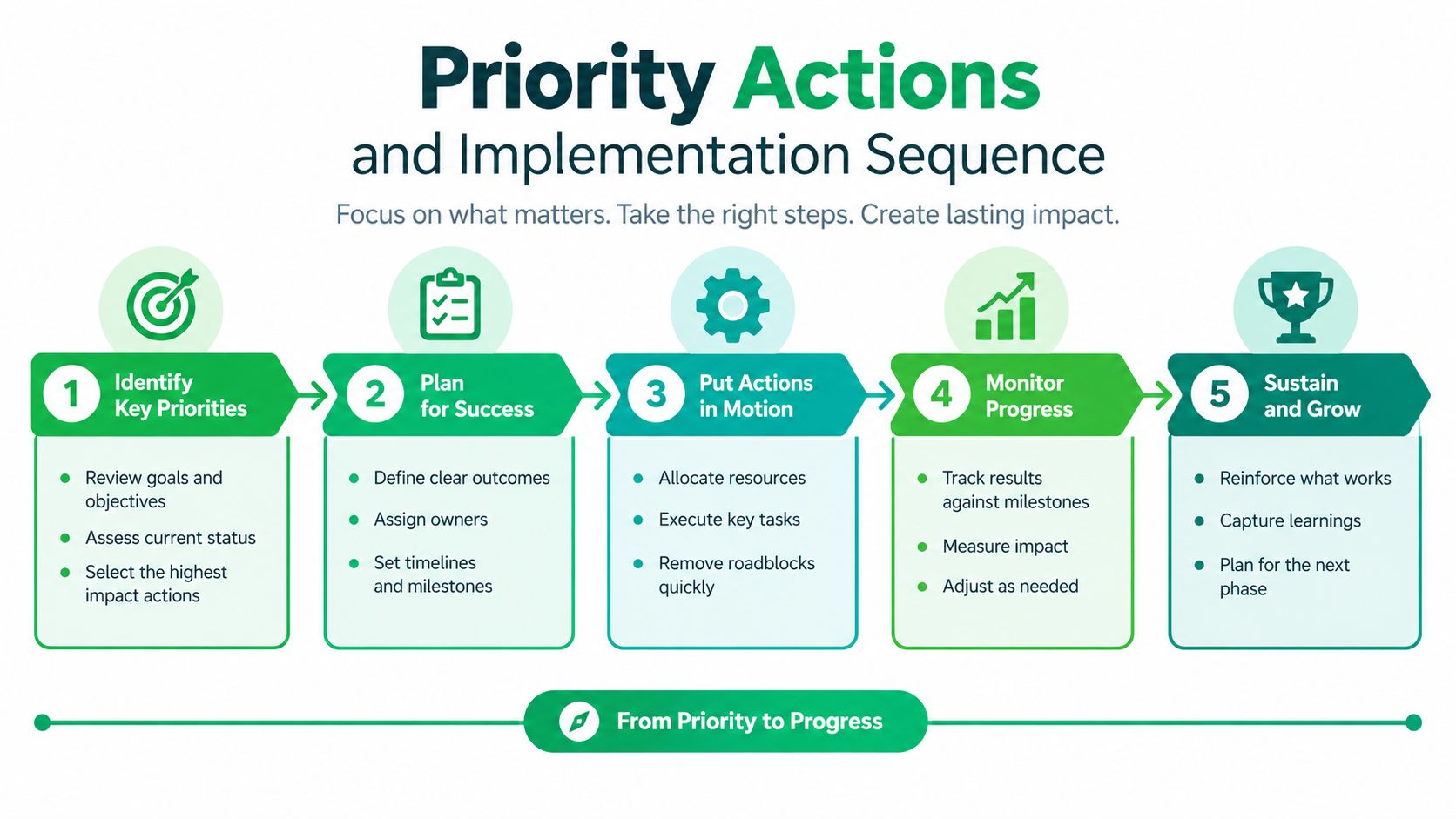
The first three steps were deliberate: Google Business Profile first, citations second, suburb-focused landing pages third. That order usually works better for a gym than starting with content, because content performs best when the business entity itself is already clean and consistent.
Why this sequence worked
Starting with the profile made sense because it's often the shortest path to improving local relevance. Searchers interact with it directly. Google also uses it as a core source of business information in Maps and local results.
Citation correction came next for a simpler reason. If the profile says one thing and the wider web says another, local trust signals are weaker than they should be. Cleaning that up creates a stronger base before asking landing pages to do heavier ranking work.
The suburb pages came last because they depend on the first two layers being stable. Once the business details were aligned, the site could target higher-intent local searches with less ambiguity.
The implementation logic in one view
- Google Business Profile improved clarity around services, access, categories, and conversion paths.
- Citation cleanup removed contradictory business details from older listings.
- Suburb landing pages gave the site targeted relevance for local search intent.
That sequence tends to produce cleaner reporting too. It's easier to tell whether content is helping when the business entity is already in order.
Google Business Profile and Citation Corrections
This stage carried a lot of weight because local searchers often decide from the profile before they even reach the website. Australian local search behaviour data from Red Search found that 93% of Australians search online for local brands and 51% use Google Maps for local searches, which is why accurate profile details and fresh reviews mattered so much.
What changed in the Google Business Profile
The profile was rebuilt around completeness and alignment. That included the real-world business name, correct address, phone number, opening hours, booking URL, and service categories that matched actual offerings. The wording also had to reflect what the gym genuinely provided, not just terms someone wanted to rank for.
A practical guide such as these Google Business Profile optimisation tips can help with the mechanics, but the important part is making the profile consistent with the website.
The core updates included:
- Primary and secondary categories that matched the gym's actual service mix.
- Hours and access details so mobile users could quickly decide whether the gym suited them.
- Booking and enquiry pathways that reduced friction for trial or membership actions.
- Photos tied to real services such as training areas, classes, and facilities.
A gym profile should answer the searcher's practical questions before they need to click through.
How the citation cleanup was handled
The citation work was less visible, but just as necessary. Older listings had inconsistent business information, so the main directories were audited and corrected one by one. Outdated entries were updated or removed, and the website, profile, and directory data were aligned to the same canonical business details.
That helped in two ways. First, it reduced contradictory local signals. Second, it made future reporting cleaner because enquiries were less likely to be split across inconsistent listings.
Reviews were treated as an operating process
Review work wasn't approached as a star-chasing exercise. The gym used a repeatable process that asked genuine members for feedback after meaningful moments such as joining, finishing induction, or attending a strong class. Requests stayed neutral, and responses were handled consistently.
That matters for trust, but it also matters for compliance. Australian Government guidance on online reviews says businesses can ask for reviews, but they must not create or arrange fake or misleading reviews, and any incentive has to apply to both positive and negative feedback with clear disclosure.
Developing Suburb Focused Landing Pages
Once the entity layer was stable, the site needed pages that could compete for real local intent. IBISWorld's count of Australian gyms and fitness centres reported 7,702 businesses in 2025, up 1.4% from 2024, which supports a more differentiated approach than a one-size-fits-all location page.
What these pages were built to do
The goal wasn't to publish a dozen near-identical suburb pages with swapped place names. It was to create pages that answered a local searcher's actual question: “Is this gym realistic for me from where I live?”
That means useful suburb pages usually include things like:
- Access details such as parking, nearby roads, or public transport convenience
- Relevant services like personal training, strength training, group classes, or membership options
- Facility-specific context so the page reflects the actual location rather than a template
- A clear enquiry path for trial, contact, or membership action
What made the pages rankable instead of thin
The strongest pages were tied to genuine availability. If the gym could realistically serve searchers from a nearby suburb, the page explained why. If not, that suburb didn't get its own page.
A useful content structure looked like this:
| Section | Purpose |
|---|---|
| Local headline | Align with suburb and service intent |
| Intro copy | Explain who the gym suits and why it's relevant locally |
| Facilities and services | Show what's actually available |
| Access information | Remove friction around location and convenience |
| Reviews and trust cues | Reinforce credibility |
| CTA | Prompt trial or membership enquiry |
Thin suburb pages usually fail because they exist for keywords first and users second.
Internal linking made a visible difference
These pages performed better when they weren't isolated. Internal links from the main membership, personal training, and group classes pages helped Google and users reach them naturally. That also let the site connect broad commercial intent with local intent without forcing awkward keyword repetition.
Suburb-focused pages produced the strongest uplift in enquiries when paired with genuine reviews and sensible internal linking. A targeted suburb gym or personal training page can become a strong acquisition page when it reflects an actual service area instead of manufactured coverage.
Technical Local SEO and Structured Data
Once the content and business data were aligned, the technical layer had to support it. Google recommends using LocalBusiness structured data with the most specific applicable subtype, and that's why the location page was marked up so the business entity was machine-readable and consistent with visible page content.
The structured data setup
The location page used a single entity representation with the business name, physical address, telephone number, URL, opening hours, and service information. For this type of business, the relevant approach was to use LocalBusiness markup with a more specific subtype where appropriate, such as HealthClub.
Anyone new to the concept can read a plain-English guide on schema markup and how it works, but the practical rule is simple. Structured data should reflect what users can see on the page. It shouldn't invent services or locations.
Validation and crawl checks
Implementation didn't stop at adding JSON-LD. The markup was checked with Google's Rich Results Test, and URL Inspection was used to confirm the page could be accessed and interpreted.
The technical review also checked for common blockers:
- Robots directives that might prevent discovery
- Noindex tags on important local or membership pages
- Canonical issues that might point Google away from the target page
- Mobile rendering problems that could hurt local usability
- HTTPS and page health issues affecting trust or performance
Why this matters for gyms
A lot of local SEO discussions over-focus on keywords and ignore crawlability. That's a mistake. If the location page is hard to access, inconsistently marked up, or disconnected internally, the local signals become weaker no matter how well the copy is written.
This project prioritised technical support for pages with clear commercial intent, especially membership, personal training, group classes, and location access. That's usually a better use of effort than trying to attract generic traffic with loosely related articles.
Results and Impact Analysis
The clearest gains showed up in the same places local gym owners usually care about most: Maps visibility, Search Console impressions, and organic clicks. Over 6 months, impressions increased from 4,500 to 9,800, clicks went from 180 to 390, and key local search terms improved from around position 18 to 5.
Before and after view
| Metric | Before | After |
|---|---|---|
| Search Console impressions | 4,500 | 9,800 |
| Search Console clicks | 180 | 390 |
| Key local rankings | Around 18 | Around 5 |
Those numbers matter because they show movement in both visibility and engagement. More impressions alone can be noisy. More clicks, combined with stronger local positions, usually suggest the business is appearing for better-fit searches and earning more trust from searchers.
What likely drove the lift
The gains didn't come from one magic tactic. They came from stacked improvements:
- Cleaner entity signals after the profile and site were aligned
- Stronger trust signals once older citation conflicts were corrected
- More targeted relevance from suburb pages tied to real services
- Better technical support for location and commercial pages
One hyper-local tactic stood out most clearly. The suburb-focused landing pages generated the strongest uplift in enquiries when supported by internal links and genuine reviews. In practical terms, that's what often turns local visibility into actual lead flow.
Rankings matter, but a gym only benefits when visibility turns into calls, direction requests, and membership enquiries.
Interpreting the impact properly
The right lesson isn't that every gym will get the same trajectory. Local outcomes depend on competition, geography, site quality, and how much operational follow-through the business can maintain. The useful takeaway is that the biggest wins usually come from fixing local fundamentals in the right order instead of chasing isolated tricks.
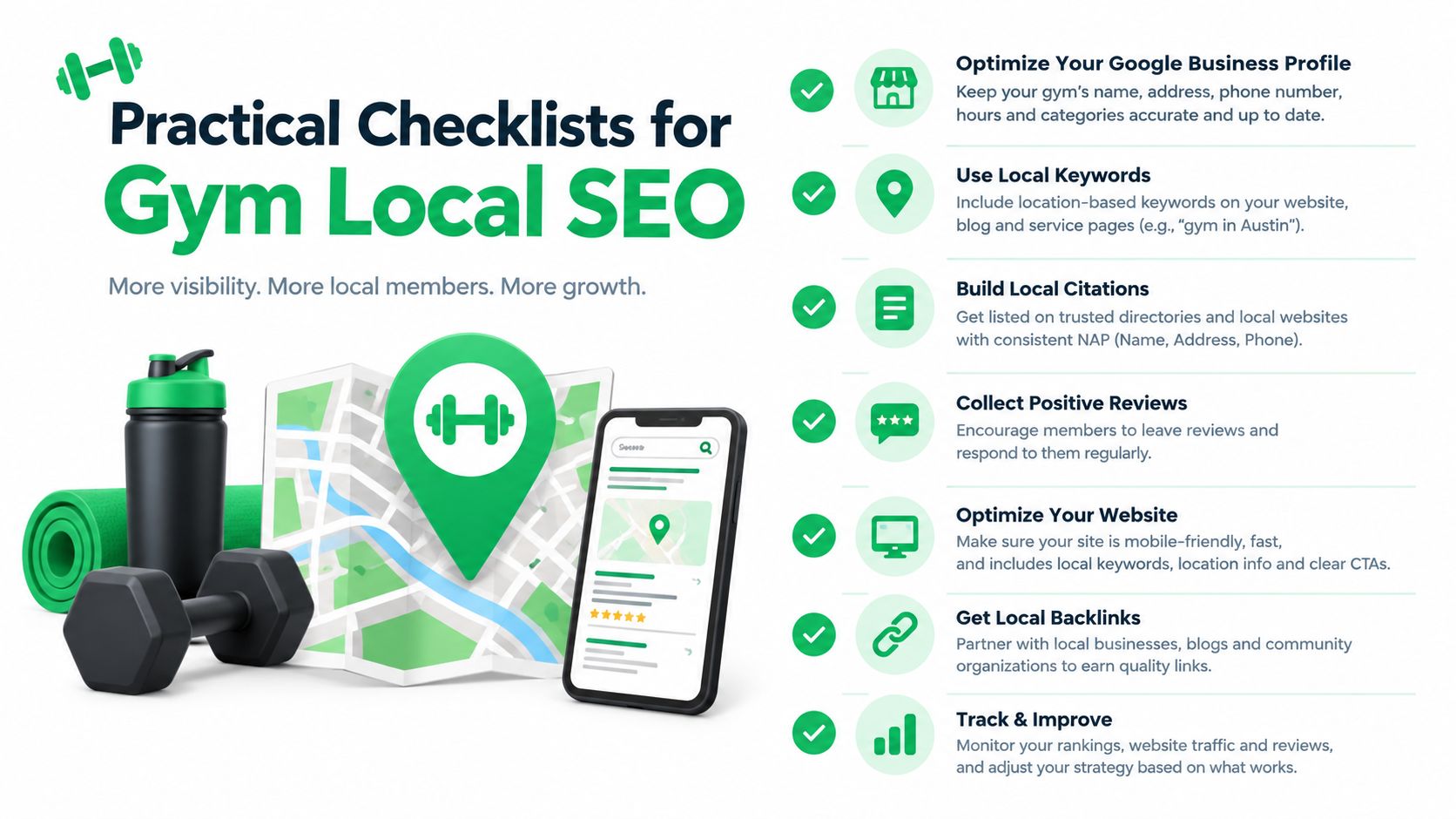
Practical Checklists for Gym Local SEO
This kind of project is easier to manage when the work is reduced to a short operating list rather than treated as a vague marketing goal.
Core execution checklist
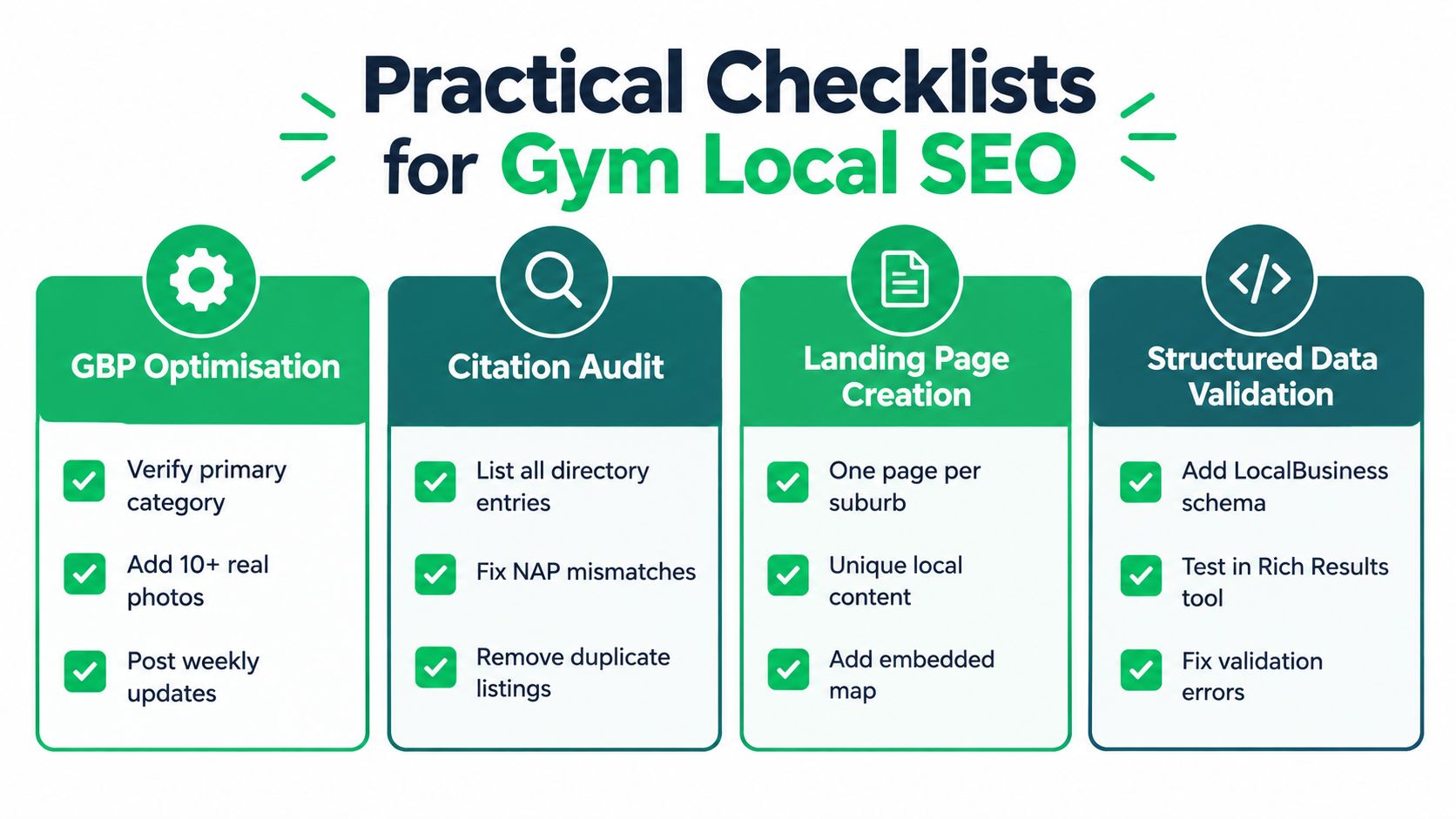
Google Business Profile
Verify categories, hours, phone number, booking link, amenities, and service descriptions. Make sure the profile matches the website exactly where core business details are concerned.Citation audit
List the main directories where the gym appears. Correct inconsistent name, address, and phone details, and remove outdated listings where possible.Landing page build
Create pages only for suburbs the gym serves. Include real service details, access information, internal links from major service pages, and a direct enquiry path.
Review and technical checklist
Review workflow
Ask genuine members after real experiences such as joining, induction, or a successful class. Keep the request neutral and avoid filtering for positive sentiment.Structured data
Add LocalBusiness markup to the location page, keep it aligned with visible content, and validate it using Google's testing tools.Measurement setup
Track profile views, calls, direction requests, website clicks, enquiry forms, trial bookings, and membership-page actions. If a provider is helping manage this, a Melbourne-based option such as SEO2RANK handles local SEO, technical work, and reporting as one connected program.
A gym owner using those checklists won't catch every edge case, but they will avoid most of the problems that keep local visibility flat.
Cross References and Further Reading
For deeper reading, the most useful references are Google's own local ranking guidance, Google's structured data documentation, and Australian material on local search behaviour and review compliance. Readers who want another service-business example can also look at how local SEO was improved for a plumber, which shows the same principles applied in a different local market.
Good supporting resources include:
- Google Business Profile local ranking guidance
- Google LocalBusiness structured data documentation
- Australian local SEO behaviour research
- Australian Government guidance on online reviews
SEO2RANK helps Melbourne businesses improve local visibility through Google Business Profile optimisation, citation cleanup, local landing pages, technical SEO, and measurement that ties search activity to real enquiries. If this article reflects the kind of work your gym needs, visit SEO2RANK to review the available audit and local SEO options.
Find Out What Is Holding Your
Website Back
Get a practical SEO Snapshot showing the biggest issues and opportunities we can see across your search visibility, website and local presence.
GET YOUR FREE SEO SNAPSHOT