

Local citations are online mentions of a business's name, address and phone number. They still matter in 2026, but mainly as trust and verification signals that support Google Business Profile, reviews and location pages, rather than as a primary ranking lever.
A Melbourne tradie or dentist can have a polished website and a completed Google Business Profile, yet still wonder why a competitor appears in the map pack first. Often, the answer isn't a lack of directory listings. It's that the business's details are scattered across the web, with an old phone number on one site, a shortened trading name on another and an address format that doesn't match elsewhere.
The practical view is simple: citations are data-quality infrastructure. They help search engines and local discovery systems confirm which business exists, where it operates and how customers can contact it. They won't replace a strong profile, good reviews, useful location pages or genuine proximity to the searcher.
Table of Contents
- What Local Citations Actually Are in 2026
- How Citations Went from Ranking Lever to Trust Signal
- Structured Versus Unstructured Citations Explained
- How Citations Stack Up Against Other Local SEO Signals
- How to Audit Your Citations the Right Way
- Common Citation Problems and How Melbourne Businesses Fix Them
- A Practical 2026 Citation Playbook for Melbourne Small Businesses
What Local Citations Actually Are in 2026
A local citation is any online mention of a business's identifying details, usually its name, address and phone number, often shortened to NAP. The mention may appear in a formal directory listing, a review platform, a council page, a local news article or a community organisation's website. A citation can still be useful even when it doesn't include a link back to the business website.
Consider a Brunswick plumbing business called Northside Flow Plumbing. Its details might appear on Yellow Pages Australia, TrueLocal and a local council page listing approved contractors or community sponsors. If all three sources show the same trading name, service address and phone number, they create a consistent record of the entity.
That record matters, but its role has changed. Australian guidance describes citations as a relatively minor direct factor for Local Pack rankings compared with Google Business Profile, reviews and proximity, while still recognising their value for legitimacy and consistent NAP data. Current Australian guidance on local citations recommends an annual audit and quarterly spot-checks of core platforms, including Google Business Profile, Apple Business Connect, Bing and Yellow Pages.
The NAP details that deserve attention
NAP consistency doesn't mean every platform must use identical punctuation. Search engines can generally understand that “123 Sydney Road” and “123 Sydney Rd” refer to the same place. Problems arise when variations change the meaning or create uncertainty.
A business should establish one canonical version of:
- Business name: The public trading name, without unnecessary keyword additions.
- Address: The correct street, suburb, state and postcode format.
- Phone number: One current number that customers can reach.
- Website: The correct domain and relevant landing page.
- Operating details: Hours, service areas and categories where the platform supports them.
A practical NAP consistency guide helps distinguish harmless formatting differences from records that need correction.
The answer to “what are local citations and do they still matter for SEO?” is therefore conditional. They matter because they reduce ambiguity and support entity trust. They don't matter as a standalone volume contest, and a business shouldn't expect a pile of low-quality listings to outrank a nearby competitor with a stronger profile, better reviews and clearer local relevance.
How Citations Went from Ranking Lever to Trust Signal
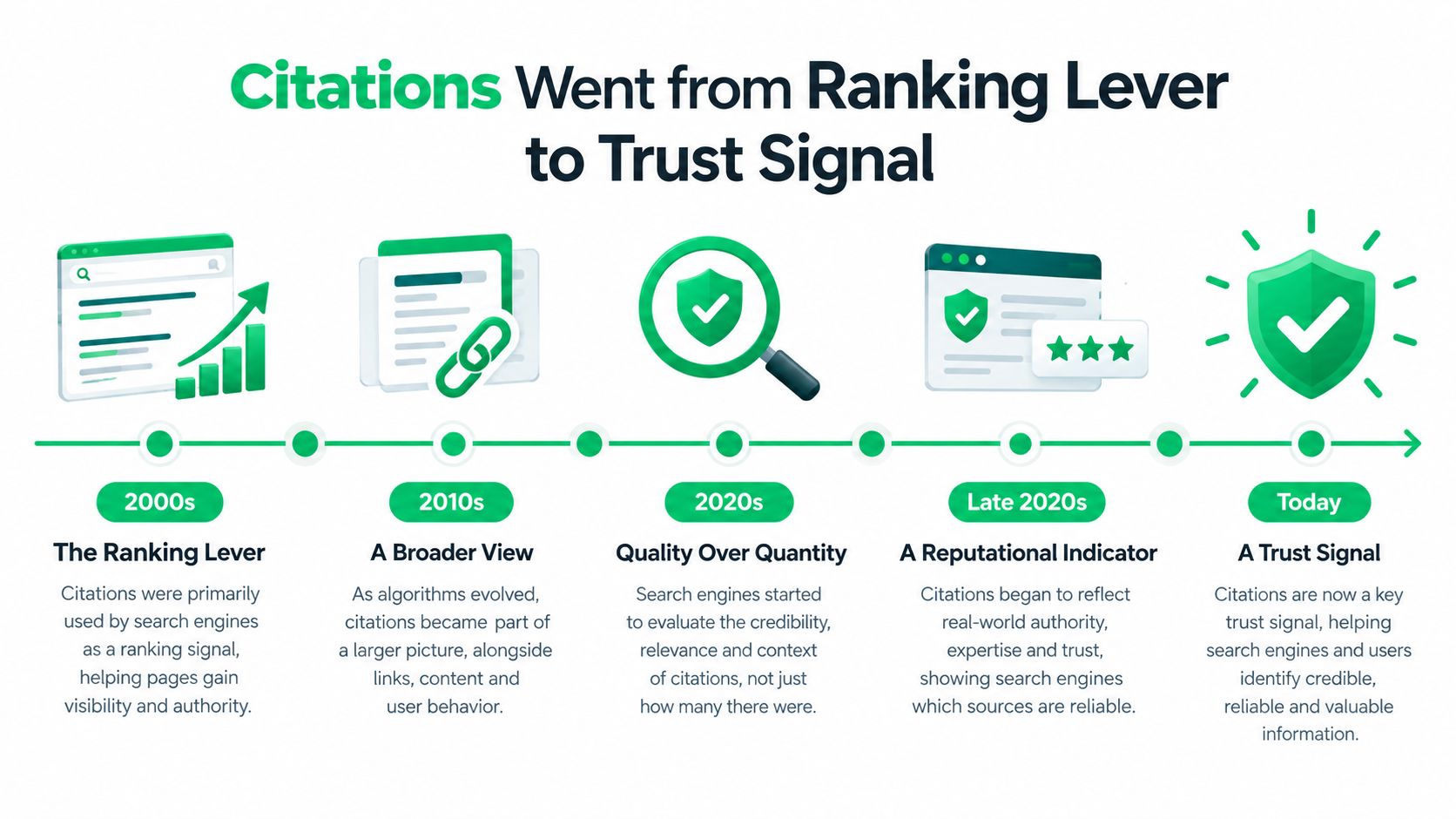
During the 2010s, local SEO practitioners often treated citations as a numbers game. A Melbourne cafe could submit its NAP to a large collection of directories and sometimes see movement without making meaningful improvements to its website or customer experience. That encouraged directory networks, repetitive submissions and listings created mainly for search engines rather than people.
Search systems became better at detecting weak patterns. Local results increasingly relied on broader context, including the business's profile quality, reviews, physical relationship to the searcher and the relevance of its website. Updates such as Possum changed how Google filtered and diversified local results, while the 2021 Vicinity update placed further attention on location and service-area relationships. Those developments made raw citation volume less persuasive.
Practical rule: A clean listing on a relevant Australian platform is more useful than a long trail of mismatched records that nobody visits.
The shift resembles a paper trail. If a Melbourne business leaves the same name, address and phone number with several credible organisations, the records corroborate one another. If one record points to a former premises in Carlton, another uses an old number and a third adds an unapproved keyword to the business name, the trail becomes harder to interpret.
Why entity confidence matters
Modern local search systems need to resolve entities, not count mentions. An entity is the identifiable business itself, including its trading name, location, category, website and service area. Consistent references make it easier to connect those pieces.
The same principle is becoming more relevant as AI systems draw answers from multiple online sources. Australian guidance now frames citations as a trust and verification layer for Google and AI systems, with emphasis on source quality and entity confirmation rather than directory volume. Australian citation guidance for entity verification reflects that direction.
That doesn't mean citations have disappeared from local SEO. It means their job is narrower and more practical. They confirm what the business says about itself, reinforce the location graph and help prevent old or contradictory records from competing with the current one.
Businesses can support that foundation by keeping Google Business Profile complete and aligned with their website. The Google Business Profile optimisation tips provide a useful companion to citation cleanup, because directory consistency can't compensate for an incomplete or unmanaged primary profile.
Structured Versus Unstructured Citations Explained
Not every citation looks like a directory card. A structured citation appears in a platform with dedicated fields for the business name, address, phone number, category, hours and website. Yellow Pages Australia, TrueLocal, Word of Mouth and Australia.com are examples of platforms where business information can be presented in an organised listing format.
An unstructured citation appears naturally inside another piece of content. A Broadsheet Melbourne feature might mention a dentist's clinic and suburb. A Bayside Council event page might name a sponsoring electrician. A local football club supporter page might identify a plumbing business and link to its website. The information may not sit inside standard NAP fields, but it still gives search systems context.
The difference in practice
Structured citations are easier for a business to control. The owner can usually claim a profile, select a category, update contact details and remove or challenge duplicates. Unstructured mentions depend more on editorial decisions, community activity, sponsorships, media coverage or local relationships.
| Aspect | Structured Citations | Unstructured Citations |
|---|---|---|
| Where they appear | Directories, map platforms and review sites | News articles, blogs, council pages and community websites |
| Information format | Fixed fields for NAP, category and hours | Natural language within surrounding content |
| Control | Usually claimable or editable by the business | Often controlled by the publisher or organisation |
| Main value | Clear NAP verification and entity matching | Local relevance, context and community association |
| Melbourne examples | TrueLocal, Yellow Pages Australia and Word of Mouth | Broadsheet Melbourne, Bayside Council and a local football club |
| Main risk | Duplicates, outdated fields and incorrect categories | Incomplete details or an old reference that remains indexed |
Google can compare both types. A structured listing may confirm the official phone number, while a local article reinforces the suburb and service category. Neither automatically guarantees stronger rankings. Together, accurate references can make the business easier to identify.
Where schema fits
Structured citations and structured data aren't the same thing. A directory listing is a citation. Schema markup is code placed on a website to describe content such as a LocalBusiness, address, service or organisation. A business owner can learn more about what schema markup does before asking a developer to add it.
The practical priority is control. Structured listings should carry the canonical NAP, while unstructured mentions should be treated as supporting context. A Brunswick dental practice doesn't need every community page to use identical formatting, but it should avoid allowing important sources to publish an old address or a disconnected phone number.
How Citations Stack Up Against Other Local SEO Signals
Citations sit in the supporting layer of local SEO. They matter most when a business has already established a credible primary profile and a website that clearly explains its services and locations.
A Melbourne business usually gets more value by fixing a suspended or incomplete Google Business Profile than by creating another directory listing. It will often get more customer-facing value from a consistent review process and a clear service-area page than from chasing an obscure directory that produces no enquiries.
The Australian search context still makes accuracy worthwhile. Sources citing local-search benchmarks report that 46% of Google searches have local intent, 76% of people searching for something nearby visit a business within 24 hours, and about 28% of those searches lead to a purchase. A separate Australian source reports that 93% of Australians search online for local brands and expect results specific to suburbs, districts and landmarks. These figures are summarised in Australian SEO and marketing research.
| Signal | Impact in 2026 | Effort | Priority |
|---|---|---|---|
| Google Business Profile | Strong direct visibility and conversion influence | Moderate | First |
| Reviews | Strong trust and relevance influence | Ongoing | First |
| Proximity | Can materially shape map results for local searches | Not directly controllable | Core constraint |
| Location pages | Supports suburb and service-area relevance in organic results | Moderate to high | High |
| Citations | Supports entity verification and data consistency | Moderate | After core assets |
A decision test for limited budgets
A Brighton cafe comparing itself with a South Yarra competitor shouldn't assume identical citation counts create a tie. If the competitor has a more complete profile, fresher customer feedback and a better physical relationship to the searcher, citation parity won't erase those differences.
A plumber, dentist or accountant can use this order:
- Profile first: Confirm the Google Business Profile is claimed, accurate, categorised correctly and connected to the right website.
- Customer signals next: Build an ethical process for requesting and responding to genuine reviews.
- Website clarity after that: Create useful service and suburb pages that match what customers need.
- Citation hygiene then: Correct important listings so the entity data agrees across the web.
- Measurement throughout: Track calls, forms and enquiries by suburb where the business has enough data to make the comparison meaningful.
This prioritisation doesn't make citations unimportant. It prevents them from absorbing budget that should address a larger visibility or conversion problem.
How to Audit Your Citations the Right Way
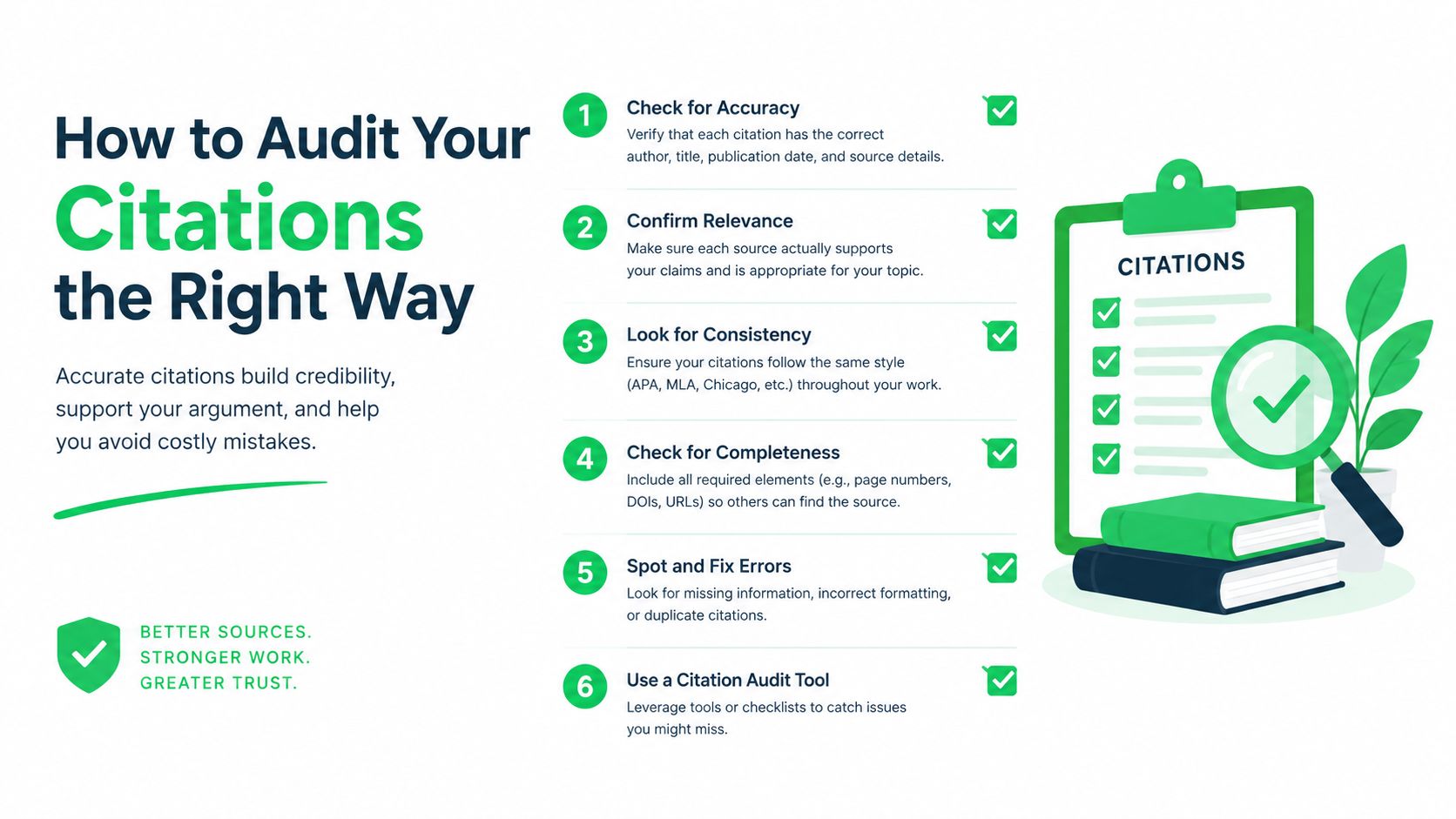
A Melbourne business should begin a citation audit with discovery, not submission. Search the brand name, phone number and key address variations, then review the first 50 Google results for outdated listings, directory pages, aggregators and scraper sites. Old contact details can fragment trust, so record what appears before making changes. An Australian local SEO checklist for Melbourne businesses provides a practical process for checking and correcting these records.
A spreadsheet is enough. Use it to separate urgent errors from harmless formatting differences, and to show which fixes are worth the available SEO budget.
A workable audit sequence
- Set the canonical record: Record the approved trading name, address, phone, website, hours and service area before changing anything.
- Search the brand: Search the full business name, common abbreviations and the phone number. Open results that appear to refer to the business.
- Check core Australian sources: Review Yellow Pages, TrueLocal, Yelp, Hotfrog, StartLocal, ABN Lookup and relevant state or council listings.
- Log each record: Add the URL, platform, current NAP, correct NAP, duplicate status, login access and fix status.
- Classify the mismatch: Mark each issue as a wrong business name, old address, wrong phone, duplicate, missing listing or low-priority formatting variation.
- Correct in order: Fix Google Business Profile and major map platforms first, then important Australian directories and relevant industry listings.
Which differences matter
A suite or unit number matters when it distinguishes one business from another. An old 03 number matters when calls still reach the wrong place. Changing “Street” to “St” is usually minor when every other field identifies the same location.
Check for duplicate profiles as well. Two records for one Melbourne clinic can split reviews, confuse patients and make ownership harder to manage. Document the evidence, claim the legitimate listing and follow each platform's duplicate-removal process. Deleting records impulsively can remove the profile that customers already recognise.
Common Citation Problems and How Melbourne Businesses Fix Them
A Brunswick electrician moves premises, rebrands and changes phone numbers over several months. One staff member updates Google Business Profile, another changes Yellow Pages and nobody touches TrueLocal. The result isn't always an obvious ranking collapse. More often, customers find an old address, ring a disconnected number or see two versions of the same business.
Melbourne businesses commonly encounter:
- Suburb drift: A listing uses a neighbouring suburb, a former municipal description or an inconsistent spelling.
- Phone replacement: A new local number appears on the profile while older directories retain the previous number.
- Duplicate profiles: Two Google Business Profiles represent the same operating location.
- Directory duplication: Yellow Pages or TrueLocal contains multiple records with different contact details.
- Rebrand residue: The former business name remains active on pages that still rank for branded searches.

The clean-up order
The business should first lock the canonical NAP. Without that decision, different staff members will continue making reasonable but incompatible edits.
Next, the clean-up normally follows this sequence:
- Correct Google Business Profile and core map profiles.
- Update the most visible Australian and industry directories.
- Review aggregators and data sources that may republish old details.
- Request edits or removals for duplicates.
- Check branded search results again after the changes are processed.
A business shouldn't create a new profile just because an old one is inaccessible. Ownership recovery, verification and duplicate suppression can involve platform-specific rules. If a listing is tied to a former owner, a moved practice or several locations, the owner should preserve evidence of the current entity and avoid making rapid changes across every platform.
Clean-up principle: Fix the source that customers and map systems trust most, then work outward. Don't scatter conflicting edits across dozens of listings.
DIY work becomes risky when the business has several locations, a major rebrand, a disputed duplicate or a large number of inherited listings. At that point, a documented audit and controlled correction plan can prevent one well-intentioned edit from creating another inconsistency.
A Practical 2026 Citation Playbook for Melbourne Small Businesses
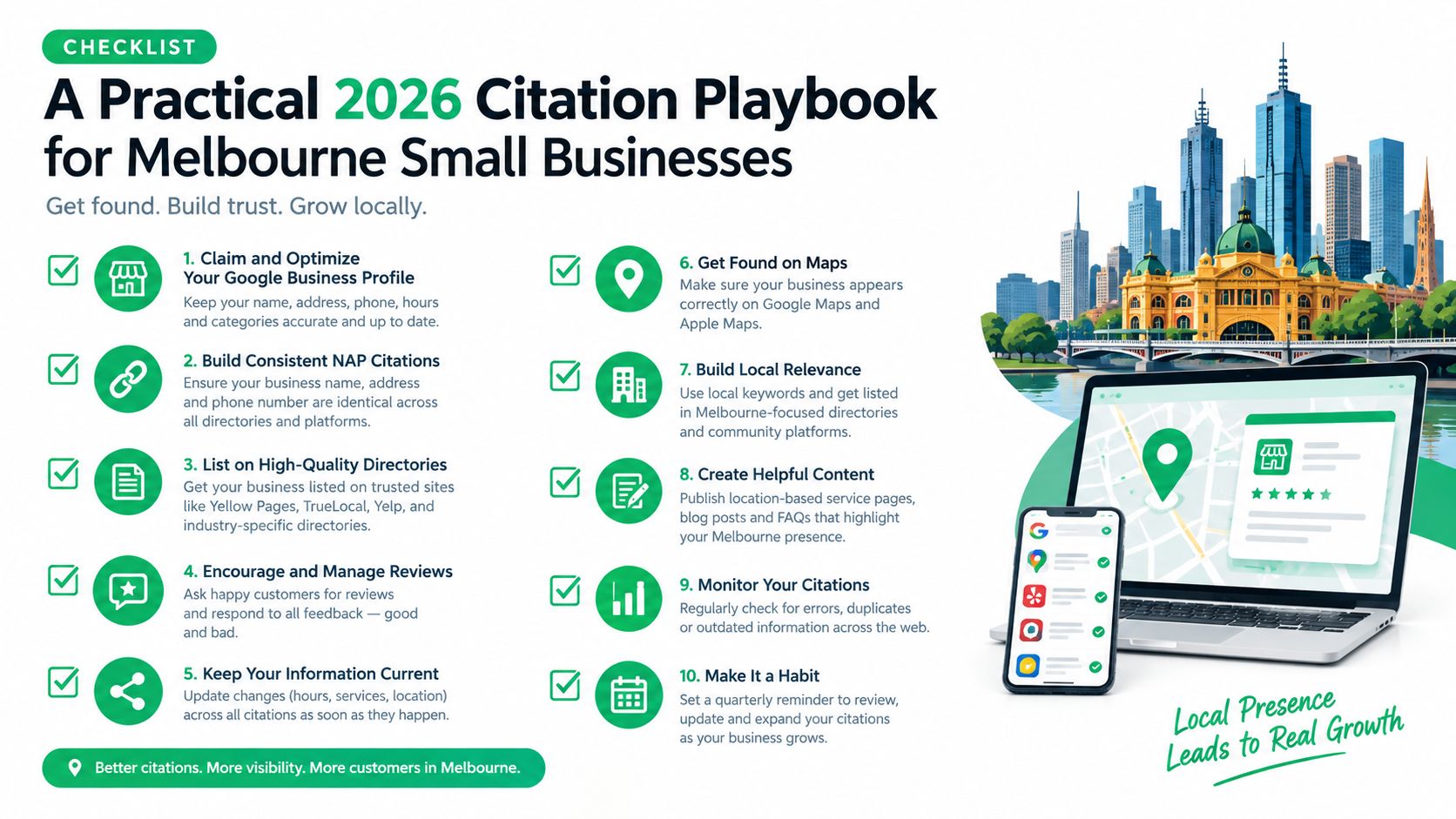
A solo operator doesn't need a directory marathon. A small business needs a controlled system that keeps the most important facts accurate and gives customers a clear path from search to enquiry.
The first three priorities are straightforward:
- Complete Google Business Profile: Confirm the business category, contact details, hours, services, service area and website destination.
- Standardise important listings: Cover the core Australian platforms and the directories that directly relate to the industry or location.
- Request genuine reviews: Make review requests part of the normal customer follow-up process, without incentives or manufactured feedback.
Australian guidance supports a quality-over-quantity model. Australian citation recommendations summarise the principle that clean, consistent citations are more useful than a large set of mismatched records.
A manageable operating rhythm
Weekly: Monitor new reviews, respond appropriately and check whether customers report contact or location problems.
Monthly: Review the Google Business Profile for changed hours, services, photos, questions and customer suggestions. Check important suburb pages and contact details on the website.
Quarterly: Spot-check the core listings, search the brand and phone number, and review any new duplicate or scraper pages. This cadence is particularly useful after staff, premises or phone changes.
Annually: Run a full citation audit, including the first 50 Google results and the major Australian directories. Remove low-value records from the active worklist and prioritise the sources that customers and search systems can use.
Businesses can track practical outcomes without pretending every change came from citations. Calls to the wrong number, direction requests to an old address, profile interactions and enquiries by suburb provide more useful evidence than citation count alone. Location pages, structured data and listings should reinforce the same canonical entity, as Australian local SEO guidance for business success recommends.
Managing a handful of core profiles is realistic for many small operators. A Melbourne SEO specialist becomes more appropriate when the business has multiple locations, more than 50 inherited listings, duplicate suppression issues or no time to verify changes properly. SEO2RANK offers local SEO work covering citation audits, NAP correction, Google Business Profile optimisation, location relevance and measurement for service businesses.
Citations are infrastructure, not a magic ranking button. The actual benefit is steadier data across local platforms, fewer lost calls caused by outdated details and a better chance that existing local traffic reaches the right business.
SEO2RANK can audit a Melbourne business's citations, standardise NAP details and align listings with its Google Business Profile and location pages. Visit SEO2RANK to review the available local SEO and measurement services, then choose the level of support that fits the business's locations and budget.
Find Out What Is Holding Your
Website Back
Get a practical SEO Snapshot showing the biggest issues and opportunities we can see across your search visibility, website and local presence.
GET YOUR FREE SEO SNAPSHOT